- Free Consultation: (813) 222-2220 Tap Here to Call Us


Florida Medical Marijuana Patients and Firearm Rights: What You Need to Know


Florida Firearm Rights: What You Need to Know
Introduction
The intersection of Florida medical marijuana laws and federal firearm prohibitions has created one of the most important constitutional battles of our time. Thousands of Floridians hold valid medical marijuana cards under Article X, Section 29 of the Florida Constitution and Chapter 381, Florida Statutes, allowing them to treat chronic conditions lawfully under state law. Yet, under federal law, these same patients are labeled as “unlawful users of a controlled substance” and face a complete ban on firearm possession under 18 U.S.C. § 922(d)(3) and (g)(3).
A recent federal appellate ruling, Florida v. Cooper (11th Cir 2025) has opened the door to challenges of this ban, reasoning that state-law-abiding medical marijuana patients are not comparable to felons or historically dangerous individuals. This marks a turning point in the Second Amendment debate, with Florida patients at the center of the national conversation.
This article explains the current state of the law, the constitutional framework after Heller, Bruen, and Rahimi, and the practical risks for Florida patients. A Tampa Federal Criminal Defense Attorney also answers the most frequently asked questions about firearms and medical marijuana in Florida, with direct citations to federal and state statutes.
If you are a medical marijuana patient facing firearm-related charges, you should not navigate this complex legal battle alone. The Law Office of W.F. “Casey” Ebsary Jr. is here to help. Call (813) 222-2220 or contact us today for a confidential consultation.
The Constitutional Framework
District of Columbia v. Heller (2008)
- Affirmed that the Second Amendment protects an individual right to keep firearms.
- Recognized self-defense as a core lawful purpose of gun ownership.
New York State Rifle & Pistol Ass’n v. Bruen (2022)
- Extended the right to carry a firearm outside the home for self-defense.
- Established the historical tradition test, requiring government regulations to be consistent with America’s firearm regulation history.
United States v. Rahimi (2024)
- Clarified that courts do not need an exact historical twin, but a law must be relevantly similar to historical disarmament practices.
- Upheld bans on firearms for individuals subject to domestic violence restraining orders, finding a tradition of disarming those who pose a threat.
The Florida Case on Medical Marijuana and Firearms
In the Florida case, medical marijuana patients challenged 18 U.S.C. § 922(d)(3) and (g)(3).
- District Court: dismissed the claim.
- Appeals Court: reversed, finding the plaintiffs were not “comparatively similar” to felons or dangerous individuals.
- Result: the government must now produce better historical evidence to justify disarming state-legal marijuana users.
This ruling does not immediately legalize firearm ownership for Florida patients, but it creates strong grounds for further constitutional challenges.
Federal vs. Florida Law: Key Differences
| Issue | Federal Law (18 U.S.C. § 922) | Florida Law (Chapter 381, Fla. Stat.) |
|---|---|---|
| Marijuana status | Illegal, Schedule I controlled substance | Legal for qualified medical patients |
| Firearm ownership | Prohibited for “unlawful users” of controlled substances | No prohibition for lawful medical users |
| Purchase of firearms | Disqualified on ATF Form 4473 | No disqualification |
| Penalties | Felony, up to 10 years prison (18 U.S.C. § 924(a)(8)) | None for lawful medical use |
The Legal Risks for Florida Patients
- Federal Firearm Ban: Owning or purchasing a firearm while using marijuana—even lawfully under state law—violates federal law.
- ATF Form 4473: Lying on this form about marijuana use is a felony under 18 U.S.C. § 1001.
- Criminal Penalties: Convictions carry prison time, fines, and loss of Second Amendment rights.
- No State Prohibition: Florida law provides no firearm restriction for medical users, creating a conflict of laws.
Top 5 Defenses for Firearm and Marijuana Charges

- Second Amendment Defense: Challenge under Bruen and Rahimi framework.
- State-Law Compliance: Patient acted lawfully under Florida’s medical marijuana system.
- Lack of Knowledge Defense: Prosecutors must prove knowing use.
- As-Applied Challenge: Federal prohibition unconstitutional as applied to lawful medical users.
- Fourth Amendment Defense: Suppress evidence obtained through unlawful searches or seizures.
Expanded FAQs on Firearms and Medical Marijuana

Not under federal law. 18 U.S.C. § 922(g)(3) prohibits unlawful users of controlled substances from possessing firearms. Since marijuana is illegal federally, even lawful state use qualifies. See 18 U.S.C. § 922.
The appellate court ruled that Florida medical marijuana patients are not automatically similar to felons or dangerous individuals. This weakens the federal government’s justification, but it does not overturn the ban.
That constitutes a false statement under 18 U.S.C. § 1001, a federal felony punishable by up to 5 years in prison.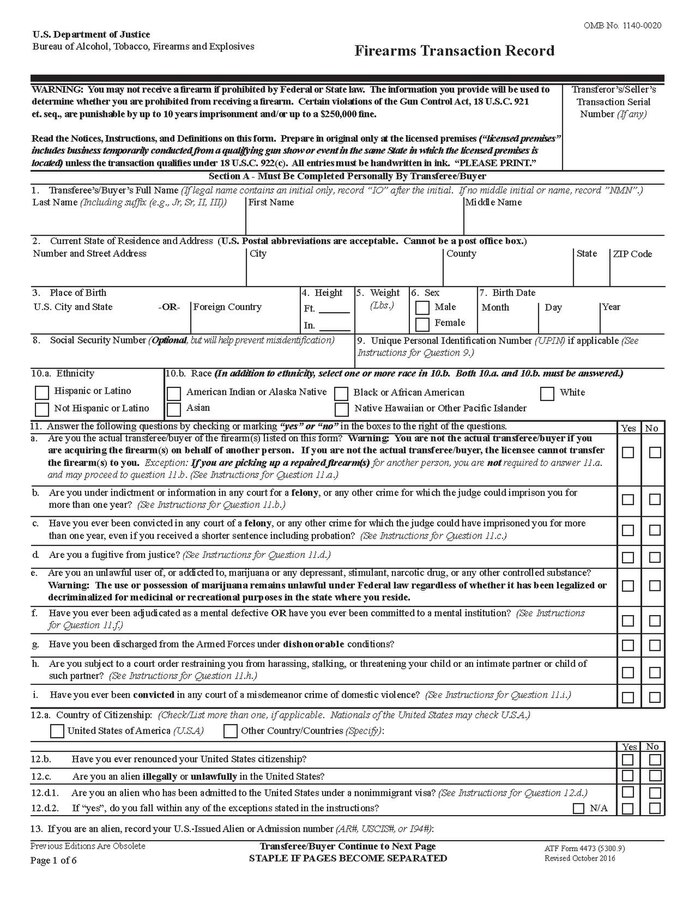
Yes. Because the issue involves the Second Amendment, state-federal conflict, and marijuana regulation, it is a strong candidate for Supreme Court review.
No. Florida law does not restrict gun ownership for patients complying with Chapter 381, Fla. Stat.
Violating 18 U.S.C. § 922(g)(3) can lead to up to 10 years in prison under 18 U.S.C. § 924(a)(8).
No. The government has historically disarmed dangerous individuals, not law-abiding patients. This is why the federal ban struggles under the Bruen framework.
If marijuana moves out of Schedule I, the basis for treating patients as “unlawful users” may weaken, potentially resolving this conflict.
You need a federal criminal defense attorney with experience in both firearms and drug law. Early defense strategy is critical.
An attorney can challenge the charges constitutionally, negotiate with federal prosecutors, and protect your rights at every stage of the case.
Table: Potential Outcomes of Federal vs. State Enforcement
| Scenario | Federal Consequences | Florida Consequences |
|---|---|---|
| Firearm possession with medical card | Felony under § 922(g)(3), up to 10 years prison | No penalty |
| Lying on ATF Form 4473 | Felony under § 1001, up to 5 years prison | No penalty |
| Buying a firearm through private sale | Still prohibited, same penalties | No penalty |
| Firearm possession without disclosure | Risk of federal charges | No penalty |
Call For Action

If you are a Florida medical marijuana patient facing federal firearm restrictions, you need an attorney who understands both Second Amendment law and marijuana regulation.
📞 Call (813) 222-2220 today or contact the Law Office of W.F. “Casey” Ebsary Jr. for a confidential consultation.
Attorney W.F. “Casey” Ebsary Jr. is a Florida Bar Board-Certified Criminal Trial Lawyer with deep experience in firearm charges, drug cases, and constitutional defenses.
Conclusion
The clash between Florida’s medical marijuana laws and federal firearm prohibitions is far from settled. Recent court rulings suggest that state-law-abiding patients cannot automatically be equated with felons or dangerous individuals, raising serious constitutional questions under Heller, Bruen, and Rahimi.
Until the U.S. Supreme Court resolves this conflict, Florida patients remain at risk under federal law. Those who face charges need experienced defense counsel to navigate this complex intersection of state and federal law.
⚖️ For skilled representation, contact Casey Ebsary today. Protect your rights, your freedom, and your future.
Full Text of the 11th Circuit Opinion (Excerpted Key Sections)
Opinion Overview
Judge Branch, joined by Judges Luck and Tjoflat, held:
“When viewed in the light most favorable to the plaintiffs, the allegations in the operative complaint do not lead to the inference that the plaintiffs are comparatively similar to either felons or dangerous individuals … We therefore vacate the district court’s order and remand for further proceedings consistent with this opinion.”
Eleventh Circuit Court of Appeals
The case reached the appeals court after the district court had dismissed the plaintiffs’ challenge under 18 U.S.C. §§ 922(d)(3) and (g)(3), applying the Bruen historical-tradition framework.
Eleventh Circuit Court of Appeals
I. Background
- Plaintiffs: Two registered Florida medical marijuana users (Cooper and Hansell) and a firearm owner (Franklin) seeking to join Florida’s medical marijuana program.
- Claims: A pre-enforcement declaratory and injunctive challenge arguing that §§ 922(d)(3) and (g)(3) are unconstitutional as applied to them.
- District Court: Dismissed the complaint, relying on analogues disarming felons and “dangerous individuals.”
Eleventh Circuit Court of Appeals
II. Standard of Review
The Eleventh Circuit reviewed the district court’s 12(b)(6) motion to dismiss de novo, accepting all well-pled facts as true and construing them in the plaintiffs’ favor.
Eleventh Circuit Court of Appeals
III. Legal Analysis under Bruen / Rahimi Framework
A. Step One – Second Amendment Coverage
The court held that:
- Plaintiffs are part of “the people” protected by the Second Amendment.
- Their conduct—armed self-defense—falls within the text’s ordinary scope.
Eleventh Circuit Court of Appeals
The court rejected the government’s argument that marijuana use excludes plaintiffs from protection, finding no authority to exclude misdemeanants or medical patients.
Eleventh Circuit Court of Appeals
B. Step Two – Historical Analogues
The government proposed two analogues:
- Felons — historically disarmed.
- Dangerous individuals — such as the mentally ill or intoxicated.
Court’s Rulings:
- Felon analogue: Plaintiffs are not convicted felons; the allegations do not suggest criminal conduct. Disarming unconvicted individuals stretches historical precedent.
Eleventh Circuit Court of Appeals - Dangerous individual analogue: The complaint contains no allegations of dangerousness, addiction, or misuse of firearms by plaintiffs. Thus, this analogy fails as well.
Eleventh Circuit Court of Appeals
Because both analogues failed to show relevant similarity in “how and why” firearms were restricted historically, the government did not meet its burden under Bruen and Rahimi.
Eleventh Circuit Court of Appeals
IV. Conclusion and Disposition
The appellate court found that the plaintiffs stated a valid Second Amendment claim at the pleading stage. As a result, it vacated the dismissal and remanded the case back to district court for further proceedings.
Eleventh Circuit Court of Appeals
The panel recognized, however, that the government might still prevail through a developed factual record in later litigation stages.
Eleventh Circuit Court of Appeals
Summary Table
| Aspect | Holding / Explanation |
|---|---|
| Second Amendment Coverage | Plaintiffs included in “the people” protected by the Amendment |
| Government’s Burden | Must justify regulations with historical analogues under Bruen |
| Felon Analogy | Rejected—plaintiffs not felons; no convictions alleged |
| Dangerous Analogy | Rejected—complaint lacks dangerousness allegations |
| Outcome | Dismissal vacated; case remanded to district court |
Related Coverage & Commentary
- News Service of Florida observed that the court found the federal government failed to align its restrictions with historical tradition.
WUSF - Reuters reported that the panel held the plaintiffs plausibly alleged Second Amendment violations, drawing on Bruen.
reuters.com